The Thought Loop: Why Your Mind Keeps Going Back
Rumination is not a thinking problem. Your mind isn't malfunctioning when it returns to the same thought again and again. It's searching for something it hasn't found yet.
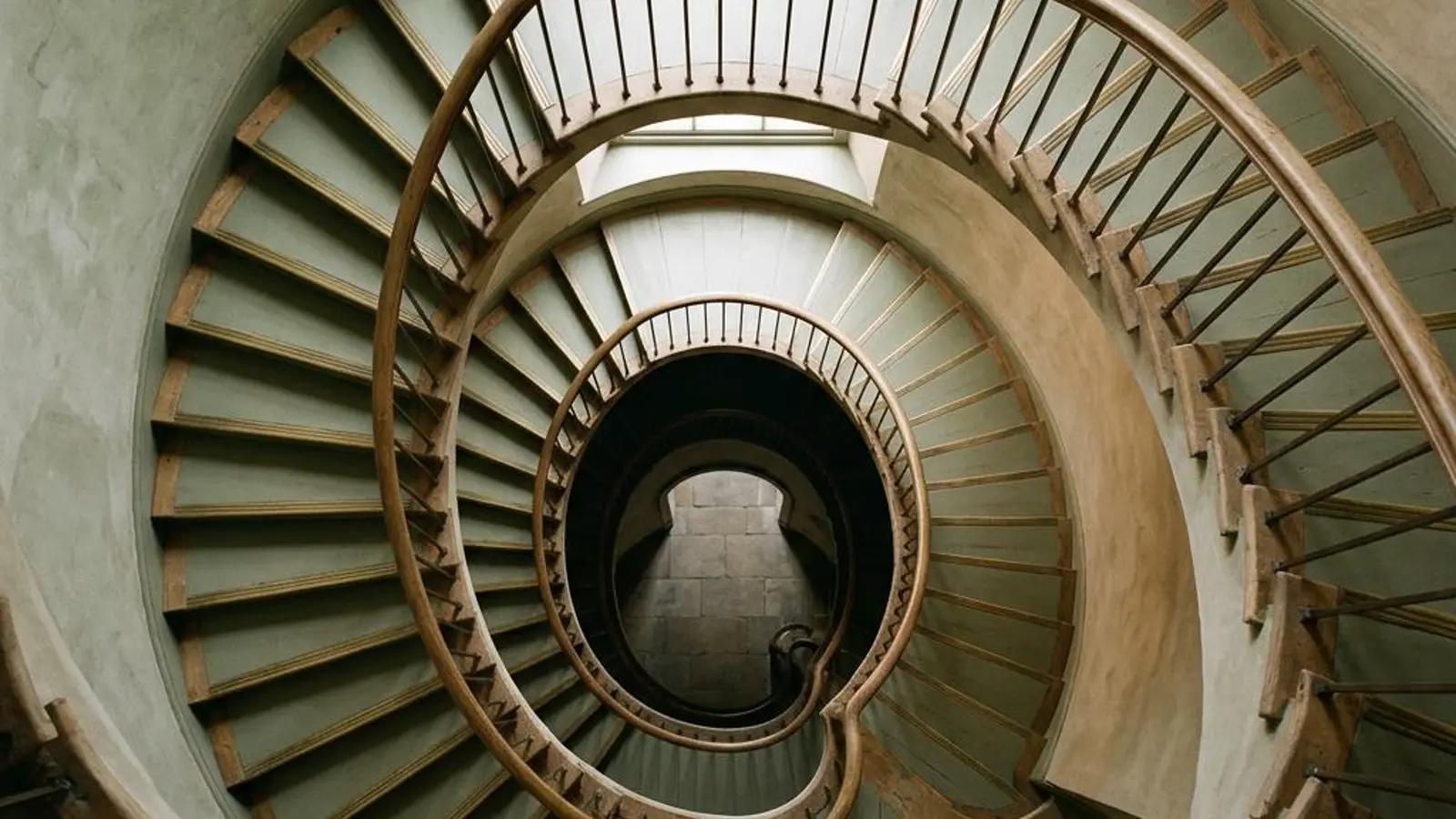
There's a version of thinking most people have experienced that feels different from ordinary thought. The ordinary kind moves forward. It arrives somewhere. This other kind circles. The same scenario. The same conversation. The same thing that was said or wasn't said or might be said in the future. It comes back at night, in the shower, in the gap between tasks. You reason your way out of it and it returns. You distract yourself and it waits. You're not losing your mind. Your mind is doing something very specific.
Rumination is the nervous system's search for resolution. Something happened or might happen that the system has flagged as unresolved. It brings the material back repeatedly because the unresolved thing needs to be processed and the system hasn't been given the conditions to process it. The return isn't malfunction. It's persistence in search of completion.
The scenarios that loop have consistent characteristics. They're usually ones where an outcome mattered to you and was uncertain or negative. The conversation where you didn't say what you meant. The interaction that ended ambiguously and you can't tell how you were received. The future scenario that could go wrong in a way that would hurt. The common thread is incompleteness. The mind is looking for a resolution it hasn't found.
What the mind reaches for when it loops is a different version of the event. One where you said the right thing. One where the outcome resolved in your favour. One where the future scenario goes well. It replays the scene looking for the version it can accept. The problem is that rethinking the scene doesn't change it. The loop keeps running because the search keeps coming back empty.
Loops are worse at night for a reason. During the day the sympathetic nervous system keeps the mind forward-facing. At night the parasympathetic system comes in and the mind shifts to processing. Unresolved material has been waiting for this window. When the lights go out and the distractions stop, the thing you were not quite thinking about steps forward. The 3am inventory of everything unresolved is not random. It's the system doing its job in the window it has.
The things that don't stop loops are worth naming: reasoning yourself out of them, telling yourself you're catastrophising, distracting yourself, keeping busy, talking about the thing repeatedly. All of these interact with the content of the loop without reaching the driver underneath it. The driver isn't a thought you can argue with. It's the nervous system's unanswered request for resolution.
What does resolve loops is letting the unresolved thing actually complete. Not analysing it further but going to the place where the incompleteness lives and meeting it there. Sometimes this happens in conversation with someone who creates enough safety for the material to move. Sometimes it requires working at the level of the system where the loop was set running. Either way, the loop is not the enemy. It's the signal. It's pointing you toward the thing that needs to be met.

Work with Julie
Ready to change this at the root?
If this resonates and you'd like to work on the pattern underneath it, the next step is a free 20-minute discovery call on Zoom. We talk through what you're working with and whether this work is the right fit. No pressure, no script.
Book your free discovery callNot ready for 1:1? Try Noma free for 7 days — support in Julie's voice for the moments the pattern shows up.
Not sure where to start? Discover your pattern.
Continue reading
Why Perfectionism and Procrastination Are the Same Pattern
Most people think of perfectionism and procrastination as opposites. One delivers too carefully. The other doesn't deliver at all. They're running the same protective strategy.
The Over-Functioner in a Relationship
The over-functioner in a relationship does everything, forgets nothing and carries more than her share. She's also quietly keeping a tally she can't talk about.
What Over-Functioning Actually Is
Over-functioning looks like capability. It feels like capability. The difference is that capability is a resource you draw on when you choose. Over-functioning is a compulsion you can't switch off.