
How Patterns Change
The patterns behind anxiety, self-doubt and overthinking weren't chosen. They were learned by a nervous system trying to keep you safe. My work reaches the level where those patterns actually live and helps you change them.
I'm Julie Cochrane, a Clinical Hypnotherapist and RTT therapist. I work with clients worldwide via Zoom.
Patterns aren't who you are. They're what you learned.
Every pattern I work with, from anxiety and perfectionism to people-pleasing and self-doubt, began as a nervous system adaptation. Something happened. Your nervous system drew a conclusion and built a response around it to keep you safe.
If achieving earned love, you learned to perform. If quietness kept you safe, you learned to stay small. If pleasing prevented conflict, you learned to put yourself last. If certainty reduced fear, you learned to overthink.
These patterns aren't your identity. They're intelligent adaptations that once helped you feel safe, connected or in control.
The difficulty is that over time these adaptations begin to feel like personality. "I'm just an anxious person." "I've always been a perfectionist." "That's just who I am." They don't feel like responses to the past. They feel like the truth about who you are.
But they're not. Patterns aren't who you are. They're what you learned. And because they were learned, they can change.
How the work moves
The four stages
01
Recognition
Your reactions make sense. You adapted. The first movement is naming the pattern without naming you as the problem.
02
Compassion
The pattern isn't who you are. It was the nervous system doing its best. Separating identity from adaptation is where shame begins to soften.
03
Hope
Because the pattern was learned, it can change. Not through willpower. By working at the level where the pattern actually lives.
04
Change
Real change happens when the nervous system repeatedly experiences something different. This is where the tools do their work.
The tool
RTT: reaching the pattern at its source
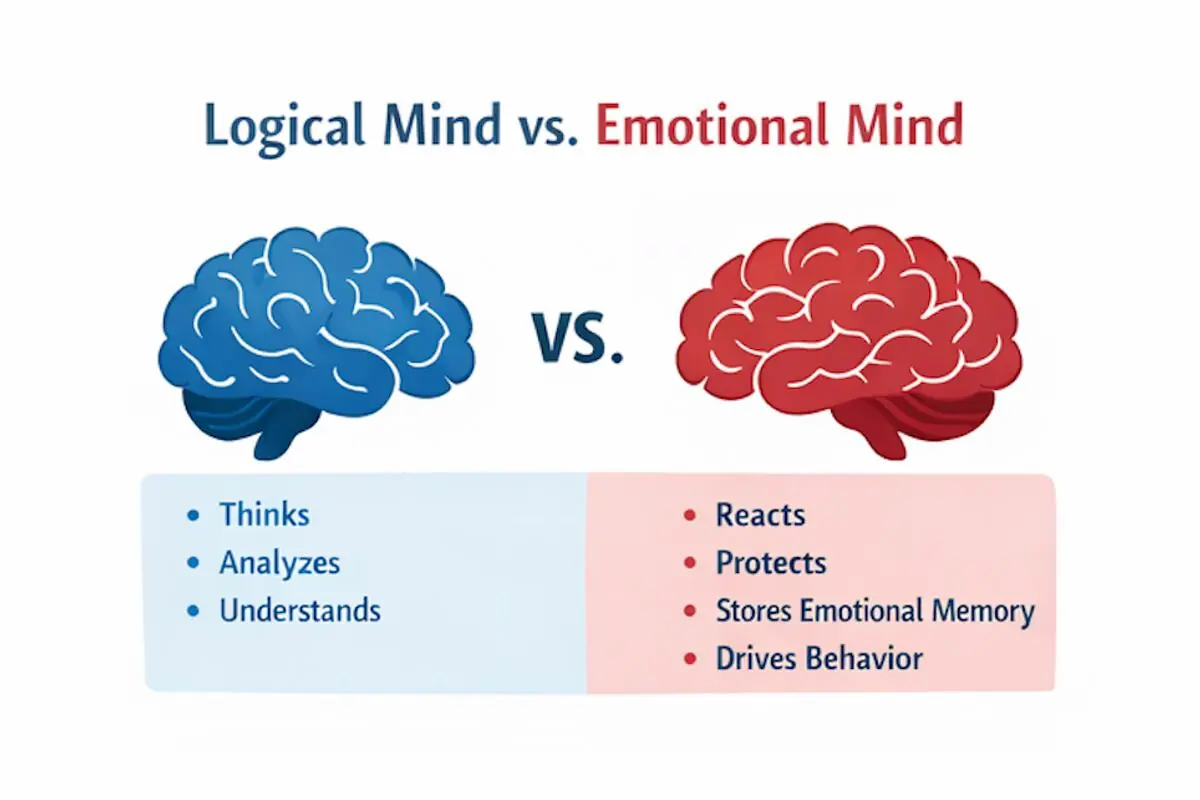
Patterns don't live in conscious thought. They live in the emotional learning your nervous system did early in life, often before you had words for it. That's why understanding a pattern intellectually doesn't always change how it feels. You can know you're safe and still feel anxious. You can recognise a pattern and still repeat it.
RTT (Rapid Transformational Therapy) is the primary tool I use within this work. Developed by Marisa Peer, it draws on the most effective elements of hypnotherapy, psychotherapy, NLP and cognitive behavioural therapy to work directly with the subconscious mind, the layer that holds your earliest emotional learning. I am one of Marisa Peer's trained RTT therapists, holding therapist-level certification — a higher level than RTT practitioner.
It's not the only tool. But it's the one that reaches the level where the pattern was first formed, quickly and precisely.
That's why people often experience significant, lasting change in just 1-3 sessions. Change that years of conscious insight and willpower often can't produce on their own.
Frequently Asked Questions

What sessions feel like
Calm, considered and entirely your own pace
Sessions are online via Zoom from wherever feels safest. Most clients settle in with tea, a notebook nearby and the door closed. You stay aware throughout. There's nothing to perform or get right. The work happens in the spaces you've probably been too busy to listen to.
For organizations
This same approach, applied to leadership and organizational performance.
The behavioral patterns that shape individuals are the same ones shaping how teams lead, communicate, and perform. Julie works with organizations on executive intensives, leadership programs, and speaking engagements.