top of page

Emotional Imprints:
Root Cause of Anxiety & Self-Doubt

You can be capable, successful and self-aware and still feel anxious, uncertain or not enough even when nothing appears wrong on the surface.

For many high-functioning people, anxiety and self-doubt do not come from current circumstances. They emerge from early emotional experiences that quietly shaped how safety, belonging and self-worth were learned long before logic or language were available.

If you have done the work and still feel stuck, the explanation may lie deeper than insight alone.


These early emotional imprints do not feel like memories and they are rarely recognized as trauma. Yet they continue to influence how the nervous system responds, how the mind interprets situations and how a person relates to themselves and others well into adulthood.

This is why insight, motivation and mindset work often help you understand what is happening but do not consistently change how it feels or how you react. The pattern was formed at a different level and lasting change requires working there.

Childhood Experience

Emotional Imprint

Belief / Meaning Formed

Pattern (Anxiety, Perfectionism, Imposter Syndrome, etc.)

Adult Behaviour & Life Outcomes

You may see yourself in this if…
 

  • You overthink everything

  • You feel like a fraud even when successful

  • You procrastinate even when things matter

  • You feel responsible for everyone

  • You are very hard on yourself

  • You fear being judged

  • You start things but cannot finish

  • You feel anxious but don’t know why

What formed early feels normal not traumatic

If you have done the work, understand yourself and still feel stuck, this page will help you make sense of why.

The Invisible Origins of Adult Struggle

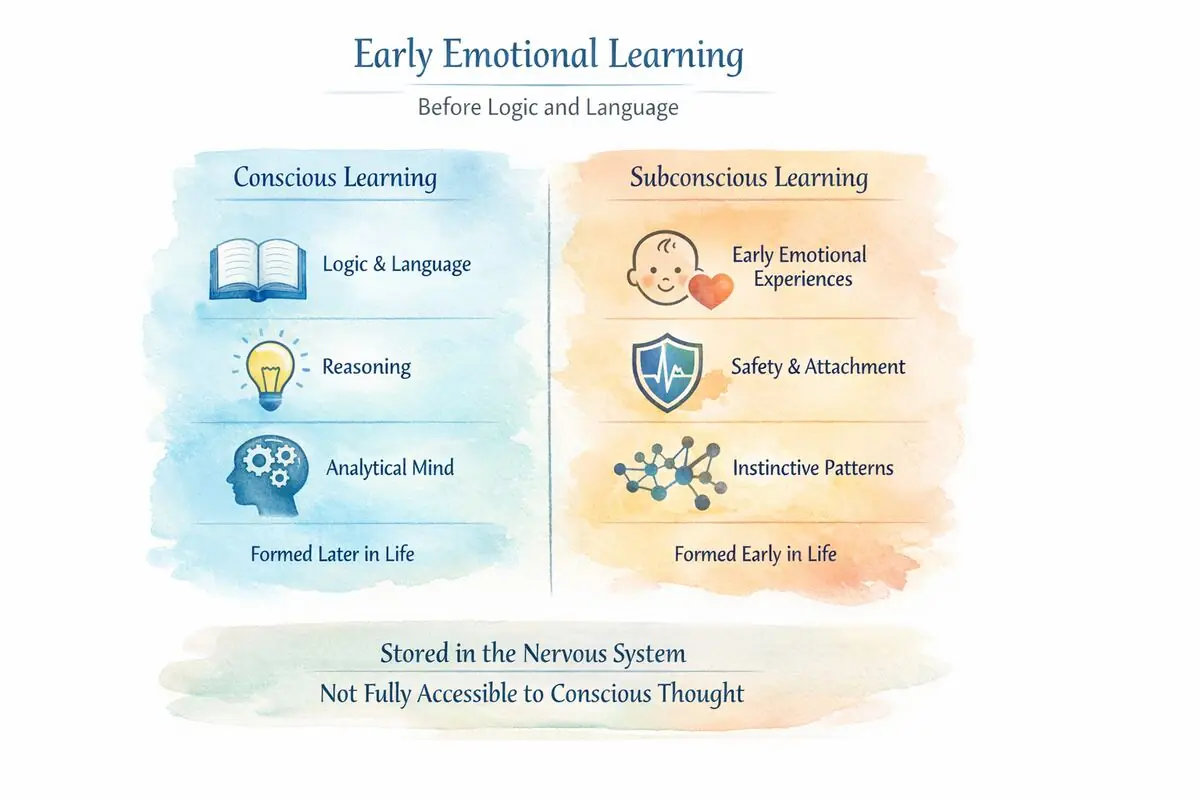
Long before we have language, logic or a clear sense of self, we are learning how the world works through emotional experience. The nervous system is constantly gathering information about safety, connection and belonging. It learns what is allowed, what is risky and what must be done in order to stay connected to others.


​​


These early lessons are not taught through words. They are learned through tone, facial expression, absence, presence and how our emotions are met or missed. A child does not need something dramatic or overtly traumatic to form powerful internal patterns. What matters is how consistently their emotional needs were seen, responded to or left unacknowledged.

Because this learning happens so early, it becomes embedded at a level beneath conscious awareness. The nervous system adapts in intelligent ways. It may learn to stay alert to anticipate others. It may learn to be self-sufficient to avoid disappointment. It may learn to perform, achieve or stay quiet in order to maintain connection. These adaptations are not mistakes. They are protective responses formed in an environment where the child was doing their best to belong and feel safe.

Over time, these early adaptations become familiar ways of being. They do not feel like responses to the past. They feel like personality. They feel like the truth. They feel like just how someone is.

These patterns are what we refer to as emotional imprints.

Emotional imprints are not memories that can be easily recalled and they are not conscious beliefs that can be talked out of. They are learned internal responses that live in the nervous system and subconscious mind. They shape how situations are interpreted, how emotions are regulated and how a person relates to themselves and others.

Because emotional imprints were formed before reasoning, they do not respond consistently to insight alone. A person can understand where a pattern came from and still feel its pull. They can know they are safe and still feel anxious. They can recognize that they are capable, yet self-doubt still arises automatically. The imprint is not responding to the present moment. It is responding to an earlier emotional reality that has never been fully resolved.

This is also why these patterns can be so difficult to recognize. They are woven into everyday reactions and internal dialogue. They often coexist with high levels of functioning competence and success. In many cases, intelligence and self-awareness make it easier to rationalize them rather than question them.


​​

                                             What formed early feels normal, not traumatic.
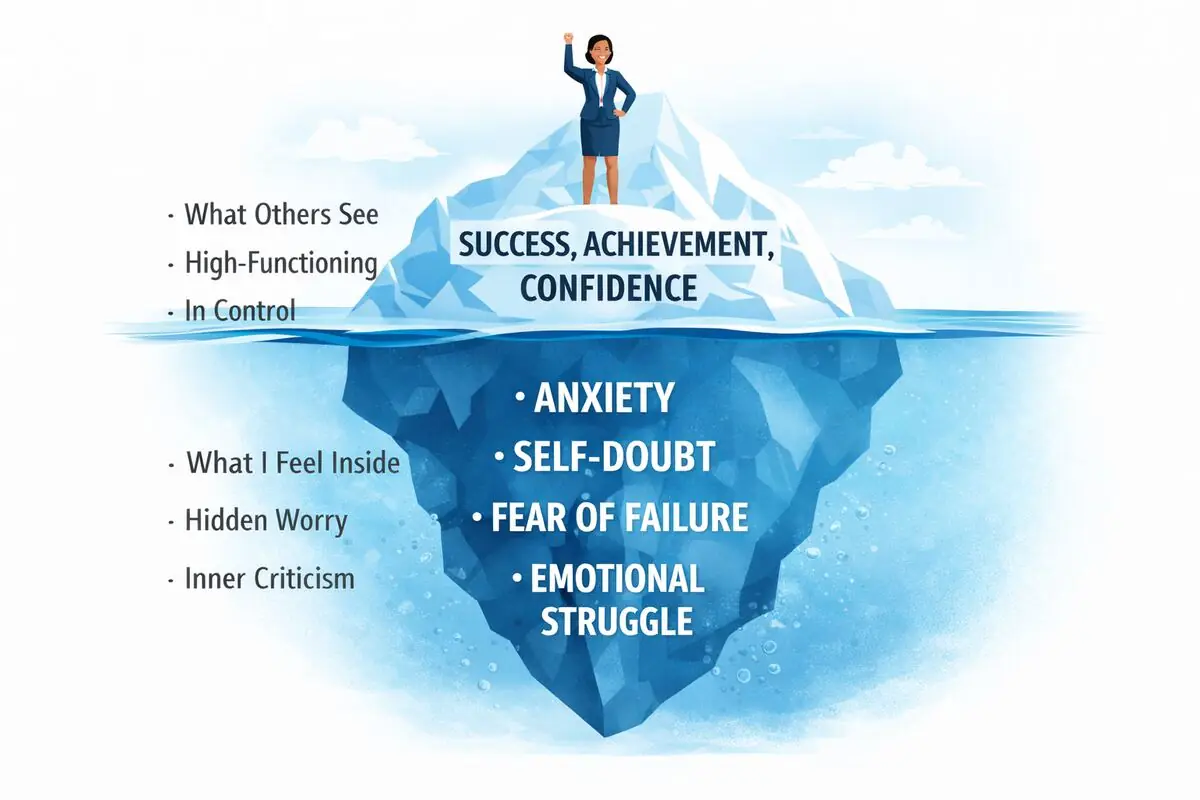


When emotional imprints are left unaddressed, they continue to influence adult life in subtle, persistent ways. Anxiety can arise without a clear cause. Self-doubt can surface even in the presence of evidence. A person may feel driven to achieve and yet never fully at ease. These experiences are not signs of weakness. They are signals pointing toward early emotional learning that is still active beneath the surface.


What Emotional Imprints Are


An emotional imprint is not just a memory.

It is the meaning the mind created about you during an earlier experience.

Children are constantly trying to understand their world.

They are trying to understand:

Am I safe
Am I loved
Am I good enough
What do I need to do to belong

When something happens that a child cannot fully understand or process, the mind creates meaning to make sense of it.


That meaning becomes an imprint.

And that imprint can continue influencing behaviour long after the original situation has passed.


Most people do not remember the moment the imprint formed.
But they live with the pattern it created.

How Emotional Imprints Form

Emotional imprints are formed during moments when something feels:

Overwhelming
Confusing
Emotionally painful
Unsafe

Or when a child feels responsible for something they cannot control

The important part is not the event itself.

It is the meaning the child created about themselves during that event.

Examples of meanings a child might create:

I am not enough
I am not important
I need to try harder
I need to be perfect
I need to stay in control
I need to take care of everyone else

These meanings become subconscious programs.

And once they are formed, the system organizes around them.


What this means:
It is not the event itself that creates the long-term pattern. It is the meaning that was formed about you during that event.

Once that meaning becomes a belief, the mind continues to create behaviour that matches that belief, often without you realizing why.


Trauma Without Big Trauma

Many people believe trauma only comes from major events.

But much of what shapes us comes from repeated emotional experiences that did not feel safe, even if they looked normal on the surface:

A child who is constantly criticized.
A child who feels invisible.
A child who feels responsible for keeping the peace.
A child who learns that love is connected to performance.

These experiences can create powerful emotional imprints without one major event ever occurring.


This is why someone can say, “nothing bad happened in my childhood,” and still struggle with anxiety, perfectionism or self-doubt as an adult.

(read all about Trauma Without Big Trauma)

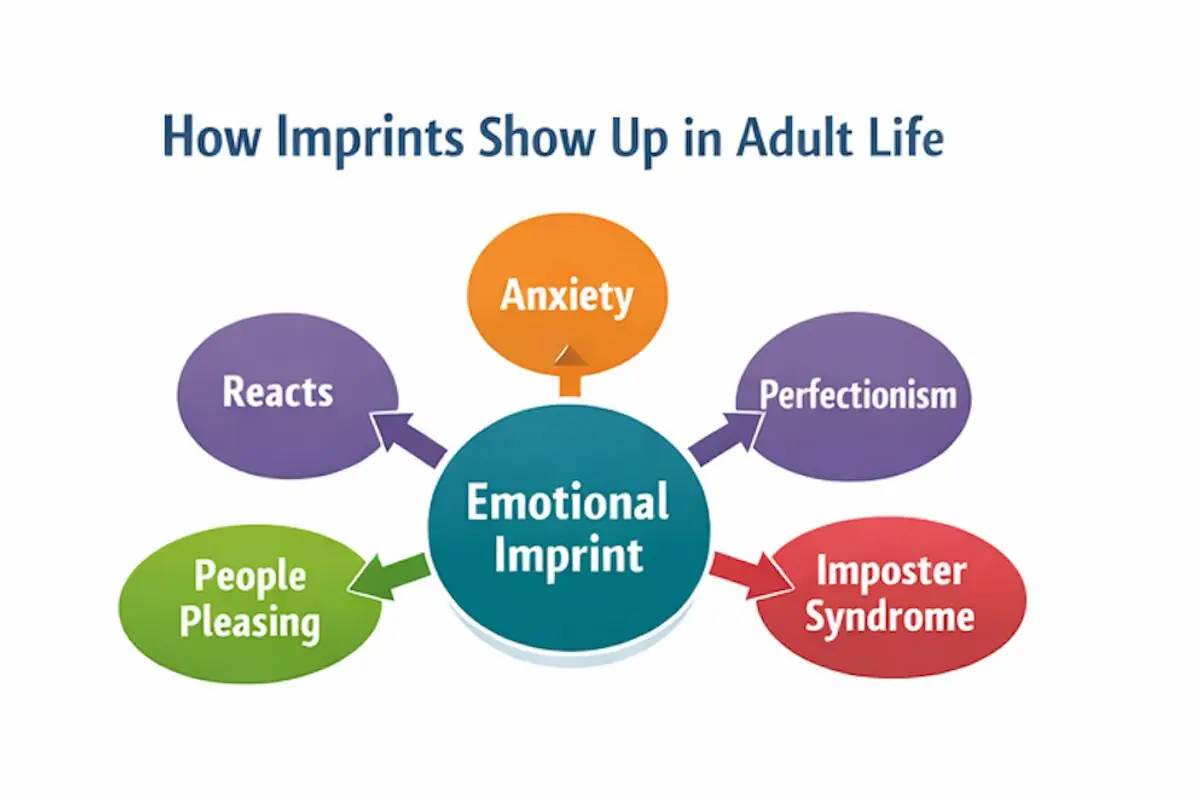
How Emotional Imprints Show Up in Adult Life

Emotional imprints often show up as patterns, not memories:
 

High-functioning anxiety
Imposter syndrome
Perfectionism

People pleasing
Fear of failure

Procrastination
Overachievement
Difficulty relaxing
Feeling not good enough even when successful

These patterns are not personality flaws.

They are adaptations.

They are strategies the mind created earlier in life to stay safe, to belong or to be accepted.

The problem is that the strategy continues long after it is no longer needed.


What this means:
Emotional imprints often show up as patterns, not memories. Anxiety, perfectionism, Imposter Syndrome,

procrastination and people pleasing are often not random problems. T

hey are strategies the mind created earlier in life to stay safe, to belong or to be accepted.


In simple terms:

  • Emotional experiences create emotional imprints

  • Emotional imprints create beliefs

  • Beliefs create patterns

  • Patterns create your life
     

If you want to change the pattern, you have to change the imprint.


Why Insight and Mindset Work Do Not Always Change the Pattern

This is one of the most confusing parts for many people.

You can understand your pattern and still feel stuck in it.

You can know you are capable and still feel self-doubt.
You can know you are safe and still feel anxious.
You can know you are successful and still feel like an imposter.

This happens because the pattern was not created logically.

It was created emotionally.

So the logical mind can understand something and the emotional response can still continue.

This is why many people feel like they are fighting themselves.

They are trying to solve an emotional imprint with logic.


What this means:
You can understand something logically and still feel it emotionally.

This is why many people say, “I know why I do this, but I still do it.”

The logical mind understands but the emotional mind is still operating from an earlier imprint.

Real change happens when the emotional meaning changes, not just the logical understanding.


The important thing to understand is that these patterns are not personality flaws.

They are learned patterns from emotional imprints.

And what is learned can be changed.


How Change Actually Happens

Real change happens when the original imprint is updated.

When the subconscious mind understands that the old conclusion is no longer true, the system no longer needs to run the same pattern.

Instead of managing the pattern, the pattern is no longer necessary.

This is why working at the level of the subconscious can create change that feels natural rather than forced.

​​​


What this means:
When the original imprint is updated and the mind no longer believes the old conclusion is true,
the pattern that grew from that conclusion no longer needs to continue. I
nstead of trying to manage the pattern, the pattern itself begins to change.

Putting it all together ... 

pp

If you're reading this and recognizing yourself in these patterns, there is nothing wrong with you.


Your mind adapted to earlier experiences in the best way it knew how at the time.

What made sense then may not be necessary now.

When we understand where a pattern comes from, we can begin to change the meaning attached to it.


And when the meaning changes, the pattern can change.


If you would like to explore what may be at the root of your own patterns, book a Discovery Call with me here:


FAQ 

What is an emotional imprint?

An emotional imprint is the meaning the mind created about you during an earlier experience.

It is not just a memory. It is the conclusion that was formed in a moment when something felt confusing, overwhelming, unsafe or emotionally significant and the mind had to make sense of it.

Children are constantly trying to understand who they are and how the world works. When something happens that they cannot fully process, the mind creates a meaning to bring order to the experience.

That meaning can become a belief, such as I am not enough, I need to be perfect, I need to stay in control or I need to take care of everyone else.

Those beliefs then influence how a person thinks, feels and behaves long after the original experience is over.


How do emotional imprints form?


Emotional imprints form during moments when something feels emotionally significant and a child does not yet have the ability to fully understand or process what is happening.

The important part is not the event itself but the meaning the child creates about themselves during that event.


Two children can have the same experience and form completely different imprints because each child interprets the experience differently.


The imprint forms when the mind creates a conclusion about identity, safety, belonging or worth and that conclusion becomes stored in the subconscious.

Can emotional imprints be changed?

Yes, emotional imprints can be changed.

But they are not changed by logic alone because they were not created logically. They were created emotionally.


Real change happens when the original meaning attached to the experience is updated at the level of the subconscious.


When the mind understands that the old conclusion is no longer true or necessary, the pattern that grew from that conclusion can begin to change.


This is why working at the level of the subconscious can create changes that feel natural and lasting rather than forced or temporary.

How do emotional imprints affect anxiety?

Anxiety is often the nervous system responding to something it believes is important for safety or belonging.


If an emotional imprint formed earlier in life taught the mind that certain situations are unsafe, overwhelming or require perfection or control, the nervous system may continue to respond to those situations with anxiety even when there is no current danger.

The response is not coming from the present moment; it's coming from the meaning that was learned earlier.


When the imprint changes, the nervous system response can change as well.

How do emotional imprints affect self-confidence?

Self-confidence is not just based on current ability. It is heavily influenced by identity.


If an emotional imprint formed earlier in life created a belief such as I am not enough, I am not important or I am only valued when I perform, then self-doubt can continue, even when a person is capable and successful.


The external world may show evidence of success, but the internal identity may still be operating from the earlier imprint.


When the imprint changes, self-confidence often changes naturally because the identity has changed.


Why do I still feel stuck even after therapy or personal development work?

Many forms of personal development work focus on insight, behaviour or conscious thought.

These approaches can be very helpful for understanding patterns and creating awareness.

But if the original emotional imprint is still in place at the subconscious level, the emotional response and automatic reactions often remain.

This is why many people say, 'I understand why I do this but I still do it.'

Understanding is important, but lasting change usually requires working at the level where the pattern was originally formed.

Is hypnotherapy effective for changing subconscious beliefs?

Hypnotherapy works with the subconscious mind, which is where emotional imprints and automatic patterns are stored.


When the mind is in a relaxed and focused state, it becomes easier to access the original meaning attached to an experience and update it.

This can allow patterns that have been in place for many years to change because the mind is no longer operating from the same conclusion.

The goal is not to control the mind but to help the mind update information that is no longer accurate or necessary.

Continue Exploring Emotional Imprints:

About the Author

Julie Cochrane is a Clinical Hypnotherapist and Rapid Transformational Therapist specializing in the root causes of anxiety, self-doubt and imposter syndrome. Her work focuses on identifying and resolving emotional imprints formed in childhood that continue to influence adult behaviour, confidence and emotional wellbeing. Julie works with clients internationally through private transformation sessions and integration coaching.

As you move through these articles, you may begin to recognize patterns that feel familiar.

That's often the first shift.

Noticing what is actually driving the experience rather than trying to manage the symptoms.

If you are ready to explore the root of your own patterns, please connect with me:

Diagram showing how early emotional experiences before language form emotional imprints that influence adult anxiety and self-doubt.
What this means:
Many of the patterns that shape how we feel about ourselves and the world were formed before we had language, logic or the ability to understand what was happening. Because these emotional imprints formed so early, they do not feel like memories. They feel like part of who we are. But they are learned patterns, and what was learned can be updated.
Iceberg diagram showing high-functioning people appearing confident and successful on the outside while experiencing anxiety and self-doubt internally.
What this means:
Many high-functioning people look capable, confident and successful on the outside while internally experiencing anxiety, self-doubt or constant pressure. The outside and the inside do not match, and this often creates confusion and exhaustion. This disconnect is often where emotional imprints are at work, quietly driving behaviour and feelings beneath the surface.
Diagram showing how an early emotional experience leads to meaning, then beliefs, and later becomes adult behaviour patterns.
Diagram showing how emotional imprints formed in childhood can lead to anxiety, perfectionism, imposter syndrome and people pleasing in adulthood.
Diagram showing the difference between logical thinking and subconscious emotional patterns stored in the emotional brain.
Diagram showing how changing emotional imprints can change anxiety, self-doubt and behaviour patterns.
bottom of page