The Sunday Night Feeling: Why the Dread Arrives Before the Week Does
It's not really about Monday. The dread that settles in on a Sunday evening is usually much older than your job and has very little to do with the week ahead.
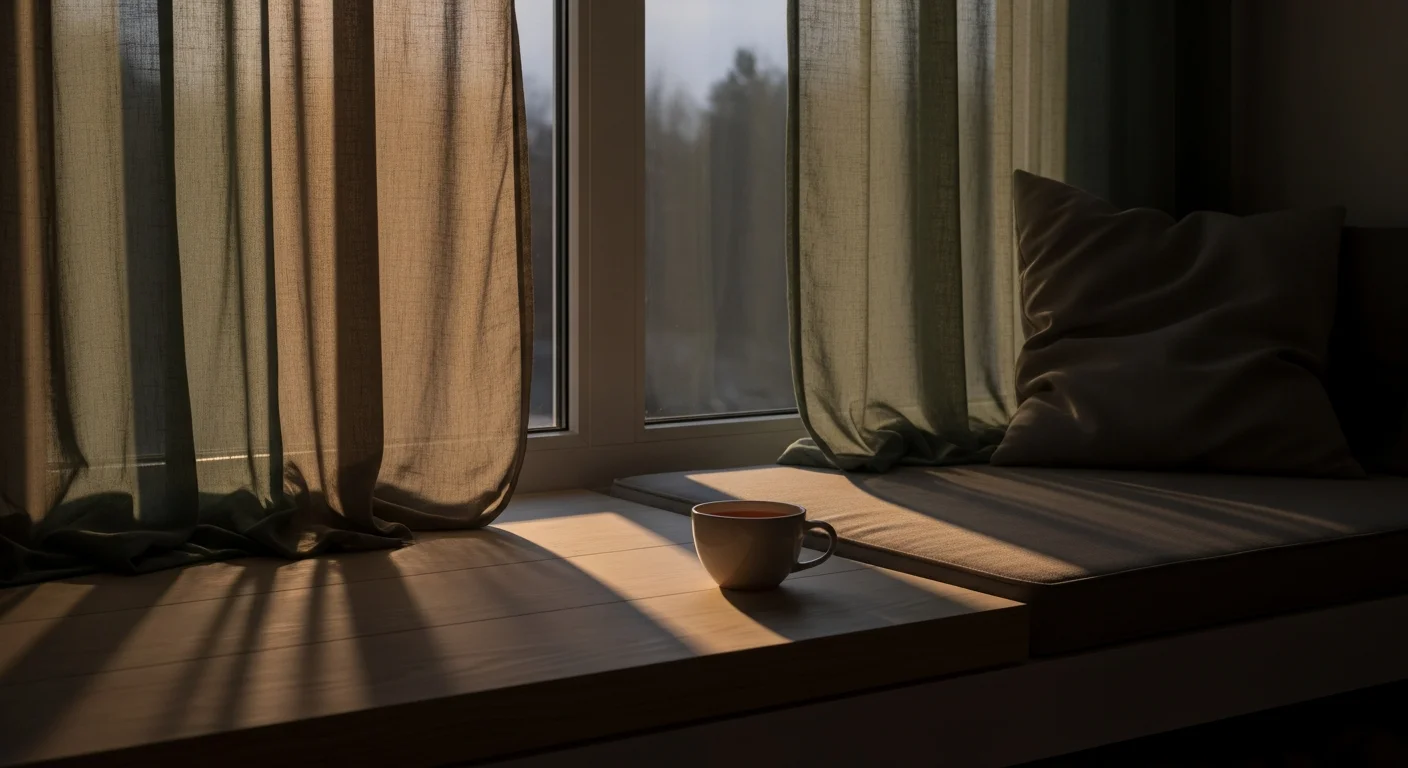
Sunday afternoon is fine. You go for the walk. You make the slow lunch. You tell yourself you've still got plenty of time to enjoy what's left of the weekend. Then somewhere around five or six in the evening, something shifts. A heaviness arrives in the chest. The light in the kitchen looks different. By eight you're scrolling through your week ahead with a low, familiar dread that has very little to do with anything specific.
Most people I work with assume this is about their job. They wonder if they need a new role or a different boss. Sometimes that's true. More often, the Sunday night feeling is older than the job. It would've arrived in some form on a Sunday night ten years ago, fifteen years ago and probably when they were a child.
The nervous system learned, a long time ago, that the end of the weekend meant the end of something safer than what came next. For some people the weekend was the one stretch of time when the household was calm. For others it was the only time a parent was less stressed or more available. For others still, Sunday night was the moment the bracing began for school the next morning, for the test, for the social complication waiting on Monday.
The body filed all of that away. Decades later, the calendar still says Sunday and the nervous system still does what it learned to do. It starts to brace. It doesn't consult your conscious mind about whether your current life actually warrants the bracing.
This is why the usual fixes don't fully work. You can have a job you genuinely enjoy and still feel the Sunday dread. You can have a calm week ahead and still feel it. You can put your phone down at six and meditate and still feel a version of it. The strategy is addressing the conscious mind. The response is coming from somewhere older.
When we work with this in a session, we go to one of the early Sunday nights the body still remembers. There's almost always a specific one underneath. A scene the conscious mind hasn't thought about in twenty years. Once that scene is met and the part of you who lived through it understands that the rule no longer applies, the body stops running the old protocol.
People often write to me a few weeks later to say they didn't notice the Sunday night feeling had gone. They only realised on a Tuesday that they hadn't braced through the weekend. The shift is quiet. It's also durable.
If you've been losing your Sunday evenings for as long as you can remember, please know this isn't just your personality. It's a learned response that can be unlearned. The end of the weekend is allowed to be the end of the weekend. Nothing else needs to happen.

Work with Julie
Ready to change this at the root?
If this resonates and you'd like to work on the pattern underneath it, the next step is a free 20-minute discovery call on Zoom. We talk through what you're working with and whether this work is the right fit. No pressure, no script.
Book your free discovery callNot ready for 1:1? Try Noma free for 7 days — support in Julie's voice for the moments the pattern shows up.
Not sure where to start? Discover your pattern.
Continue reading
The Anxiety Underneath the Anxiety
The thing you're anxious about is usually not the thing you're anxious about. There's a layer underneath the presenting worry and it's that layer that doesn't shift when the presenting worry resolves.
Why You Can't Think Your Way Out of a Triggered State
You've had all the insights. You know exactly why you do this. And in the moment it happens, the insight is nowhere to be found. This isn't a failure of understanding. It's how the nervous system works.
The Thought Loop: Why Your Mind Keeps Going Back
Rumination is not a thinking problem. Your mind isn't malfunctioning when it returns to the same thought again and again. It's searching for something it hasn't found yet.