The Mind That Will Not Switch Off at Night
You are exhausted. You have been exhausted since lunchtime. The lights go out and your mind chooses that exact moment to begin its nightly review of every conversation you have ever had. Here is what is actually going on.
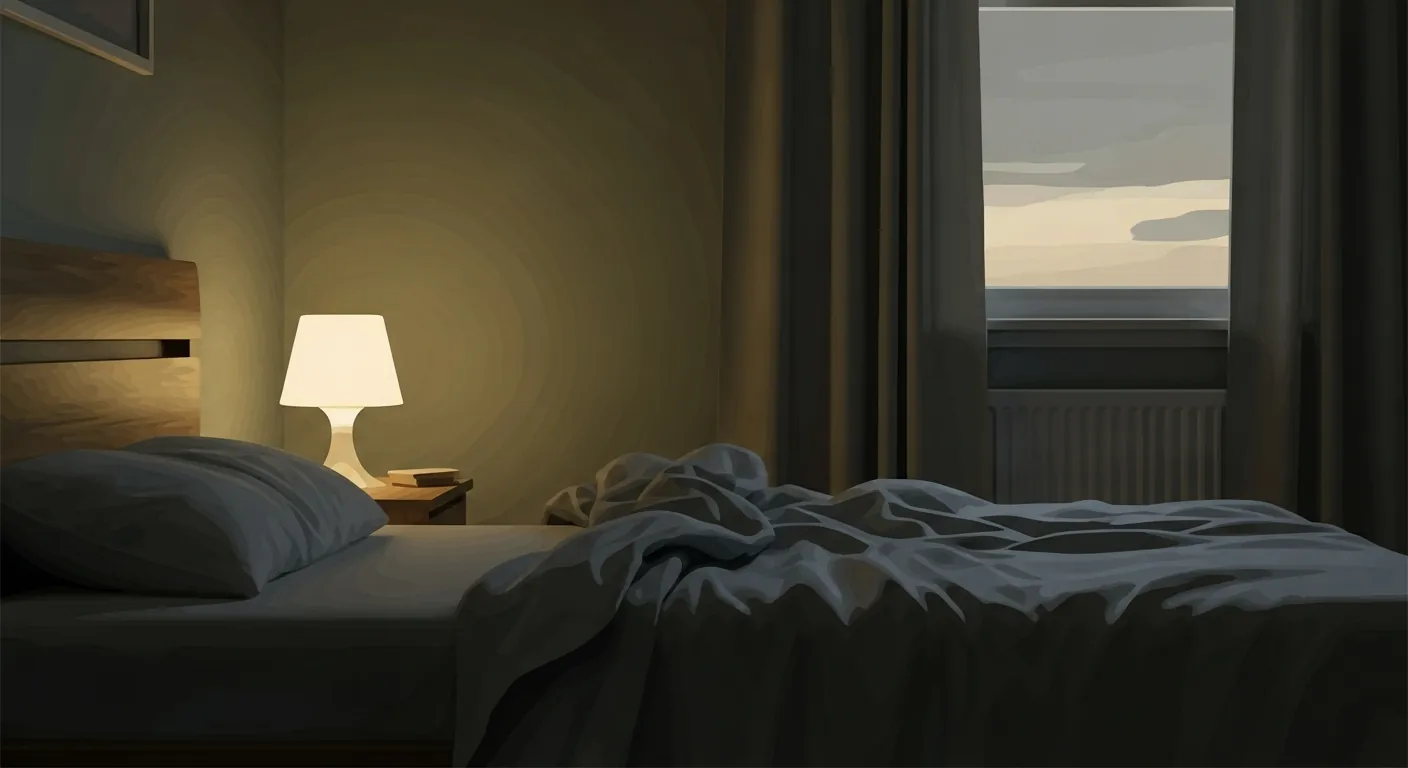
The pattern is so common it's become almost a cliche. You spend the day functional, capable and competent. You reach the evening and you're tired in your bones. You get into bed and within thirty seconds of the light going off, your mind picks up a topic and runs with it. The email you should've sent. The thing you said in that meeting in 2017. The conversation with your sister you've been meaning to have. The list goes on for an hour, sometimes two, sometimes most of the night.
You've probably tried the standard suggestions. The phone is out of the room. The room is cool. You have a notebook by the bed for the racing thoughts. You meditate. Or at least you have a meditation app. You've read about sleep hygiene and you can recite the rules. And still the mind starts up the moment the light goes off, as if waiting for its cue.
The frustrating part is that the mind seems to be doing this on purpose. It seems to have been saving up material all day, waiting for the moment your defences are lowest, then releasing the whole archive at once. You're not imagining that. It's exactly what's happening. And there's a reason for it.
During the day, the conscious mind is busy. There's work to do. There are people to manage. There's a steady stream of incoming demand that the conscious mind has to attend to. Underneath all that activity, your subconscious is still processing, still flagging things, still running its quiet threat scan. It's just being talked over. The moment the lights go off and there's no longer any incoming demand to attend to, the subconscious finally has the floor. And it's been waiting all day.
What it brings up isn't random. The 2017 meeting, the unanswered email, the conversation with your sister, none of it is filler. Each of those items is something the subconscious has flagged as unresolved. During the day you were too busy to address them. At night, in the quiet, they're presented in order. The system isn't malfunctioning. It's doing exactly the job it was built to do. The trouble is the job is being done at the worst possible time.
Underneath even this, for a great many people, there's an older layer. The mind that won't switch off at night was very often, in childhood, the mind that needed to stay alert. Maybe the household was unpredictable in the evenings. Maybe a parent came home in an unreadable mood and the child learned to keep one ear listening. Maybe night time itself wasn't safe in some way the body still remembers. In all of those cases, the nervous system learned that sleep was a state you couldn't afford to drop into without keeping watch.
Decades later, in a perfectly safe bedroom in a perfectly safe life, that watch is still being kept[1]. The mind running through your day is the modern, polite version of a much older alertness. It's no longer scanning for the sound of a door slamming. It's scanning for the email you might've forgotten or the thing you might've said wrong. The function is the same. Stay alert. Don't let your guard down. Sleep only when you're absolutely certain nothing requires your attention. Which, of course, is never.
This is why turning the phone off doesn't fix it. The phone was never the problem. The phone was a symptom of a nervous system that doesn't feel safe enough to power down. You can remove every external trigger and the internal one keeps going because the internal one is older than the phone and was there long before the phone arrived.
In a session we work with the part of you who learned that nights required vigilance. We meet her in the early scene where she made that decision. We let her understand that the house she's still listening to is no longer the house she's in. When she lets go of the watch, sleep stops being something you have to negotiate with. It becomes something the body remembers how to do on its own.
If your nights have been like this for as long as you can remember, please don't assume it's your personality or a permanent fault in your wiring. It's a learned response. It can be unlearned. The exhausted version of you who's been bracing against sleep every night is allowed to put the watch down. There's no longer anything she needs to listen for.
If this feels familiar, you can read about hypnotherapy for high-functioning anxiety.

Work with Julie
Ready to change this at the root?
If this resonates and you'd like to work on the pattern underneath it, the next step is a free 20-minute discovery call on Zoom. We talk through what you're working with and whether this work is the right fit. No pressure, no script.
Book your free discovery callNot ready for 1:1? Try Noma free for 7 days — support in Julie's voice for the moments the pattern shows up.
Not sure where to start? Discover your pattern.
Continue reading
Why You Shut Down in Conflict
You don't go silent in conflict because you don't care. You go silent because some part of you learned a long time ago that speaking up when things were tense wasn't safe.
The Anxiety Underneath the Anxiety
The thing you're anxious about is usually not the thing you're anxious about. There's a layer underneath the presenting worry and it's that layer that doesn't shift when the presenting worry resolves.
Why You Can't Think Your Way Out of a Triggered State
You've had all the insights. You know exactly why you do this. And in the moment it happens, the insight is nowhere to be found. This isn't a failure of understanding. It's how the nervous system works.